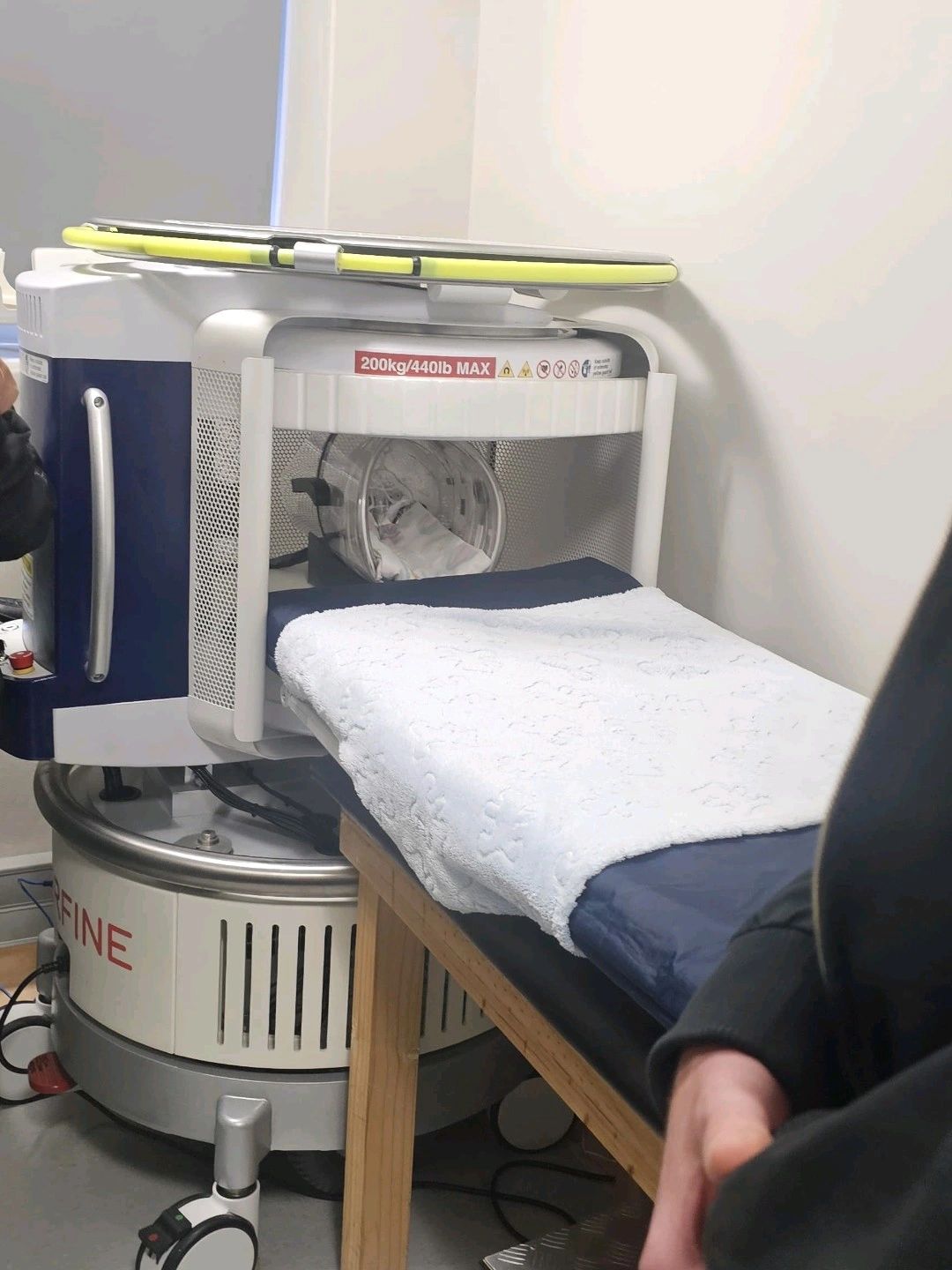
Ultra-Low-Field MRI
Ultra-Low-Field MRI: Transforming Neurological Care Across Africa
Neurological diseases are among the fastest-growing health challenges across Africa. Every day, hospitals receive patients suffering from stroke, epilepsy, traumatic brain injuries, brain infections, hydrocephalus, and other conditions that require fast and accurate diagnosis. Yet for many families, obtaining an MRI scan remains one of the biggest obstacles to receiving proper care.
In many parts of Africa, a patient may need to travel several hours to reach a hospital with MRI services. Even after making the journey, there is no guarantee that the scanner is operational, available, or affordable. For many families, these delays can mean worsening illness, permanent disability, or even loss of life.
Fortunately, medical imaging is entering a new era. Ultra-low-field MRI is emerging as one of the most promising innovations in diagnostic imaging. By reducing the infrastructure, power, and cost requirements traditionally associated with MRI, this technology has the potential to expand access to high-quality neuroimaging across Kenya and the wider African continent.
However, technology alone will not solve Africa's imaging challenges. Successful implementation requires planning, workforce development, operational readiness, and strong leadership. As healthcare organizations prepare for the future, the focus must shift from simply acquiring scanners to building sustainable imaging systems that deliver long-term value.
This article explores why ultra-low-field MRI matters, how it works, and what healthcare leaders should do today to prepare for tomorrow.
Key Takeaway
Ultra-low-field MRI is making advanced neurological imaging more accessible by reducing the infrastructure and cost barriers that have traditionally limited MRI services across Africa.
The Neurological Imaging Crisis in Africa
Every healthcare professional working in Africa has seen it happen.
A child develops seizures that become increasingly frequent. A young adult suddenly loses movement on one side of the body after a stroke. An elderly patient experiences memory loss, confusion, and worsening headaches. A newborn's head continues to enlarge because of untreated hydrocephalus.
In each case, doctors need detailed brain imaging to understand what is happening inside the patient's head. Without imaging, clinicians often rely on symptoms, physical examinations, and limited laboratory investigations.
While these methods remain valuable, they cannot replace the detailed anatomical information provided by MRI.
Unfortunately, MRI remains unavailable for millions of Africans.
The Long Journey to Diagnosis
For many patients living outside major cities, obtaining an MRI scan is rarely straightforward.
- Long travel distances
- High transport costs
- Accommodation expenses
- Lost income while travelling
- Long waiting lists
- Scanner downtime
- Limited appointment availability
By the time the patient receives imaging, valuable treatment time may already have been lost.
The Hidden Cost of Delayed Imaging
Delayed diagnosis affects more than clinical outcomes. It also creates financial and emotional burdens for patients, families, healthcare providers, and governments.
- Longer hospital stays
- Higher treatment costs
- Greater complication rates
- Increased disability
- Reduced workforce productivity
- Higher mortality
Why MRI Matters in Neurological Care
MRI has become one of the most valuable diagnostic tools in modern medicine. Unlike X-ray or CT, MRI provides exceptional visualization of soft tissues without exposing patients to ionizing radiation.
Healthcare professionals rely on MRI to diagnose and monitor conditions such as stroke, epilepsy, hydrocephalus, brain tumours, multiple sclerosis, traumatic brain injuries, tuberculosis meningitis, congenital abnormalities, and many other neurological disorders.
Supporting Better Clinical Decisions
Medical imaging is not simply about producing pictures. It is about providing answers.
- Determine whether surgery is required
- Guide medication decisions
- Support emergency interventions
- Plan rehabilitation
- Identify additional investigations
The Traditional Barriers to MRI Access
Traditional high-field MRI systems require substantial investment before the first patient can even be scanned.
- High purchasing costs
- Purpose-built construction
- Radiofrequency shielding
- Cooling systems
- Stable electrical power
- Specialist engineers
- Highly trained radiographers
- Ongoing maintenance
- Service contracts
These requirements have historically limited MRI installation to major urban hospitals, leaving millions of people in rural and underserved communities without access.
Infrastructure Challenges
Many district hospitals were never designed to support conventional MRI systems.
- Limited electrical capacity
- Frequent power interruptions
- Space limitations
- High maintenance costs
- Lack of specialist engineers
Even hospitals that own MRI scanners often experience prolonged downtime because of delayed maintenance or unavailable spare parts.
A New Generation of MRI Technology
Medical imaging continues to evolve rapidly. One of the most exciting developments is the emergence of ultra-low-field MRI systems.
Rather than replacing every conventional MRI scanner, these systems expand access where traditional MRI has been difficult or impossible to install.
Several manufacturers are developing compact and portable MRI systems capable of operating in environments that previously could not support MRI technology.
This represents a significant shift in healthcare delivery because imaging can increasingly move closer to the patient instead of requiring the patient to travel long distances.
What Is Ultra-Low-Field MRI?
Ultra-low-field MRI operates at a much lower magnetic field strength than conventional hospital MRI systems while still producing clinically useful images for selected neurological applications.
| Traditional MRI | Ultra-Low-Field MRI |
|---|---|
| 1.5T or 3T | Much lower magnetic field |
| Large installation requirements | Compact footprint |
| Higher power consumption | Lower power requirements |
| Expensive infrastructure | Reduced infrastructure needs |
| Urban hospitals | District and rural hospitals |
Because of these characteristics, ultra-low-field MRI offers an opportunity to expand diagnostic imaging to facilities that previously could not support conventional MRI technology.
Why This Matters for Kenya and Africa
Across Kenya and many African countries, governments continue investing in universal health coverage, referral hospitals, specialist services, and digital health infrastructure.
Diagnostic imaging must grow alongside these investments.
Ultra-low-field MRI creates an opportunity to decentralize neuroimaging services by bringing advanced imaging closer to communities that need it most.
Instead of concentrating MRI services in only a few large cities, healthcare organizations can begin planning for regional imaging networks that improve access, reduce referrals, shorten diagnosis times, and ultimately deliver better neurological care throughout Africa.
The Benefits of Ultra-Low-Field MRI for African Healthcare
Ultra-low-field MRI is more than just a new scanner. It represents a different way of thinking about diagnostic imaging. Instead of concentrating advanced technology in a few major referral hospitals, healthcare leaders can begin expanding imaging services to facilities much closer to where patients live.
For Africa, this shift could have a significant impact on healthcare delivery. Patients living in rural counties, remote districts, and underserved communities often experience delays simply because advanced imaging is unavailable locally.
By placing MRI technology closer to these communities, hospitals can reduce unnecessary referrals, improve diagnosis times, and provide treatment much earlier.
Why This Matters
Ultra-low-field MRI brings advanced neurological imaging closer to patients, helping hospitals reduce delays, improve diagnosis, and strengthen equitable healthcare delivery across Africa.
Improving Access to Neurological Care
Neurological diseases require timely diagnosis. Every delay increases the risk of permanent disability or death.
Ultra-low-field MRI can help healthcare providers diagnose conditions such as:
- Acute stroke
- Hydrocephalus
- Epilepsy
- Brain infections
- Traumatic brain injuries
- Brain tumours
- Congenital abnormalities
Instead of referring every neurological patient to a national referral hospital, district hospitals could perform initial imaging closer to the patient's home.
- Faster diagnosis
- Earlier specialist consultation
- Quicker treatment decisions
- Improved patient outcomes
Reducing Healthcare Inequality
Access to MRI should not depend on where someone lives. Unfortunately, patients in many rural communities continue to experience significant barriers when seeking advanced neurological imaging.
Ultra-low-field MRI offers an opportunity to reduce these disparities by expanding imaging services into underserved regions.
Healthcare becomes more equitable when access is determined by clinical need rather than geographical location.
Supporting District and County Hospitals
County governments across Kenya continue investing in healthcare infrastructure, including referral hospitals, emergency care, surgery, maternity services, and intensive care.
However, advanced diagnostic imaging remains unavailable in many of these facilities.
Ultra-low-field MRI has the potential to strengthen county hospitals by expanding their diagnostic capabilities and reducing unnecessary referrals to national hospitals.
Bringing Imaging Closer to Communities
- County referral hospitals
- District hospitals
- Teaching hospitals
- Emergency departments
- Intensive care units
- Rural health facilities
The closer imaging services are to patients, the faster clinicians can make informed treatment decisions.
Portable MRI Opens New Possibilities
Traditional MRI scanners are permanently installed in specially designed buildings. Portable ultra-low-field MRI introduces a different model by bringing imaging closer to critically ill patients.
- Intensive Care Units
- Emergency Departments
- Stroke Units
- Neurosurgical Wards
- Paediatric Units
Reducing unnecessary patient transfers can improve safety while increasing clinical efficiency.
Emergency Neurological Assessment
Stroke, severe head injuries, and acute neurological deterioration require immediate assessment. Portable MRI expands the situations where advanced neuroimaging can contribute to faster clinical decision-making.
Technology Alone Is Not Enough
Purchasing equipment is only one component of successful MRI implementation.
Healthcare organizations should also invest in:
- Strategic planning
- Clinical governance
- Staff training
- Workflow design
- MRI safety
- Quality assurance
- Preventive maintenance
- Performance monitoring
Without these foundations, even advanced imaging technology cannot achieve its full clinical potential.
The Importance of Workforce Readiness
An MRI scanner cannot operate independently. Successful imaging programmes depend on skilled multidisciplinary teams.
- MRI Radiographers
- Radiologists
- Medical Physicists
- Biomedical Engineers
- Nurses
- Referring Clinicians
- Hospital Administrators
Continuous professional development ensures imaging teams remain prepared as MRI technology continues evolving.
Training Is an Investment, Not an Expense
Introducing new imaging technology without investing in people increases operational risks.
Comprehensive MRI training programmes should include:
- MRI Physics
- Patient Screening
- MRI Safety Zones
- Emergency Procedures
- Infection Prevention
- Image Optimisation
- Equipment Operation
- Clinical Protocols
Well-trained healthcare professionals maximize patient safety while improving image quality and operational efficiency.
Building Local Expertise
Africa has a unique opportunity to develop its own MRI workforce through universities, teaching hospitals, professional societies, and continuous education programmes.
MRI Safety Must Remain a Priority
Lower magnetic field strength does not eliminate the need for comprehensive MRI safety programmes.
- Patient screening
- Staff screening
- Emergency response plans
- Equipment safety policies
- Controlled access
- Incident reporting
- Continuous audits
Creating a Culture of Safety
Successful MRI departments are built on strong safety cultures rather than equipment alone.
- Open communication
- Continuous learning
- Regular safety drills
- Policy reviews
- Staff education
- Incident reporting
The Growing Role of Healthcare Imaging Consultancy
As imaging technology becomes more accessible, healthcare organizations increasingly require expert guidance before making major investments.
Healthcare imaging consultants support organizations with:
- Imaging needs assessments
- Equipment planning
- Procurement strategy
- Vendor evaluation
- Facility planning
- MRI workflow optimisation
- Operational audits
- Capacity building
- Workforce development
- MRI safety implementation
Planning Before Purchasing
Healthcare leaders should answer important questions before purchasing MRI equipment.
- What clinical services will the scanner support?
- Who will operate the equipment?
- How will maintenance be managed?
- What staff training is required?
- How will referrals be handled?
- How will quality be monitored?
- How will success be measured?
Careful planning significantly improves the likelihood of long-term operational success.
Preparing for Africa's Imaging Future
Ultra-low-field MRI has the potential to transform neurological care across Africa, but lasting success depends on preparation rather than technology alone.
Healthcare organizations that invest today in planning, governance, workforce development, operational excellence, and patient safety will be best positioned to maximize the benefits of this new generation of MRI technology.
Looking Ahead
The future of MRI in Africa is not simply about installing more scanners. It is about building sustainable, safe, patient-centred imaging services that improve healthcare outcomes for generations to come.
The Future of Ultra-Low-Field MRI in Africa
Africa stands at an important moment in the evolution of healthcare. Population growth, increasing life expectancy, urbanization, and the rising burden of non-communicable diseases are placing unprecedented pressure on healthcare systems. At the same time, governments and healthcare organizations are investing more than ever in improving access to quality medical services.
Diagnostic imaging must become part of this transformation. Ultra-low-field MRI offers an opportunity to rethink how imaging services are delivered. Rather than concentrating MRI scanners in only a handful of tertiary hospitals, countries can begin building distributed imaging networks that bring advanced diagnostics much closer to the communities they serve.
This is more than a technological advancement. It represents a shift toward equitable healthcare where patients receive timely diagnosis regardless of where they live.
A New Era for African Healthcare
Ultra-low-field MRI provides an opportunity to decentralize diagnostic imaging, improve neurological care, and reduce healthcare inequalities by bringing MRI services closer to underserved communities.
Building Sustainable Imaging Networks
Expanding MRI access should not focus only on increasing the number of scanners. Healthcare leaders should instead build complete imaging ecosystems that combine people, technology, governance, and continuous improvement.
- Modern imaging technology
- Highly trained healthcare professionals
- Digital healthcare systems
- Standardized clinical protocols
- Continuous quality improvement
- Reliable maintenance programmes
- Strong clinical governance
When these components work together, imaging services become more reliable, more efficient, and more valuable to patients.
The Role of Artificial Intelligence
Artificial Intelligence is rapidly becoming an important partner in modern medical imaging. Rather than replacing radiologists or radiographers, AI supports healthcare professionals by improving efficiency, image quality, and diagnostic confidence.
For ultra-low-field MRI, AI has the potential to support several clinical functions.
- Image enhancement
- Noise reduction
- Faster image reconstruction
- Clinical decision support
- Automated measurements
- Workflow optimisation
- Quality assurance
As AI continues to evolve, it will further improve the clinical usefulness of portable MRI systems while helping healthcare organizations manage growing imaging workloads.
Supporting Radiologists
Across many African countries there remains a shortage of radiologists. AI can assist by prioritizing urgent examinations, highlighting possible abnormalities, and streamlining reporting workflows. This allows radiologists to concentrate on complex cases while improving reporting turnaround times.
Artificial Intelligence should be viewed as a clinical assistant rather than a replacement for experienced imaging professionals. Human expertise remains central to accurate diagnosis and patient care.
Digital Healthcare Integration
Modern imaging extends far beyond the MRI scanner itself. Healthcare organizations increasingly require integrated digital systems that allow clinicians to securely access patient images, reports, and historical studies from different locations.
Successful implementation should include:
- PACS integration
- Radiology Information Systems (RIS)
- Electronic Medical Records (EMR)
- Secure cloud storage
- Teleradiology services
- Digital reporting platforms
Digital integration improves collaboration between hospitals while supporting continuity of patient care and more efficient clinical decision-making.
Public and Private Partnerships
Transforming diagnostic imaging across Africa requires collaboration. Governments, healthcare providers, universities, equipment manufacturers, development partners, and professional societies all have important roles to play.
Successful partnerships may include:
- Joint infrastructure investment
- Equipment financing
- Clinical training programmes
- Research collaborations
- Continuing professional education
- Technology transfer initiatives
- Workforce development programmes
Working together allows organizations to accelerate healthcare transformation while maximizing available resources.
Strengthening Local Capacity
Sustainable healthcare depends on developing African expertise. Rather than relying exclusively on external consultants, countries should continue investing in local MRI educators, radiographers, radiologists, biomedical engineers, medical physicists, and MRI safety professionals.
Strong local leadership creates resilient healthcare systems capable of supporting future technological innovations.
Preparing Hospitals for Ultra-Low-Field MRI
Before introducing any new MRI technology, healthcare organizations should conduct comprehensive readiness assessments covering clinical, operational, technical, and financial considerations.
- Expected patient volumes
- Neurological service demand
- Referral pathways
- Clinical protocols
- Emergency workflows
- Available space
- Electrical systems
- Network connectivity
- Environmental requirements
- Equipment security
- Staff competencies
- MRI safety knowledge
- Continuing education
- Clinical supervision
- Emergency preparedness
- Appointment scheduling
- Image reporting
- Equipment maintenance
- Quality assurance
- Performance monitoring
Thorough preparation reduces implementation risks while improving long-term operational success.
Recommendations for Healthcare Leaders
Healthcare executives should view ultra-low-field MRI as part of a broader imaging strategy rather than simply purchasing new equipment.
- Develop a long-term imaging strategy.
- Invest continuously in workforce development.
- Strengthen MRI safety programmes before implementation.
- Build partnerships with governments, universities, healthcare organizations, and equipment manufacturers.
- Measure performance using quality indicators such as patient waiting times, equipment utilization, report turnaround times, image quality, staff competency, and patient satisfaction.
Leadership Matters
Technology creates opportunities, but leadership determines success. Healthcare organizations that combine strategic planning, workforce development, MRI safety, and operational excellence will be best positioned to maximize the benefits of ultra-low-field MRI across Africa.
Why Resonance Strategy Group Supports This Vision
The future of healthcare imaging in Africa requires more than advanced technology. It requires strategic leadership, long-term planning, workforce development, operational excellence, and an unwavering commitment to patient safety.
Many healthcare organizations invest heavily in imaging equipment without fully preparing for implementation. While purchasing an MRI scanner is an important milestone, it is only one component of a successful imaging programme.
Resonance Strategy Group works alongside hospitals, healthcare providers, governments, development partners, universities, and private investors to ensure imaging projects are carefully planned, professionally implemented, and sustainably managed.
Building Sustainable MRI Services Across Africa
Our mission is to help healthcare organizations create safe, efficient, patient-centred MRI services that improve diagnostic quality while delivering long-term clinical and operational value.
Our healthcare imaging consultancy services include:
- Healthcare Imaging Strategy
- MRI Procurement Planning
- Vendor Evaluation and Selection
- MRI Facility Planning and Design
- MRI Workflow Optimisation
- MRI Safety Programme Development
- MRI Operational Audits
- Capacity Building
- Radiographer and Clinical Workforce Development
- Clinical Governance
- Quality Assurance
- Long-Term Imaging Advisory Services
Every healthcare facility has unique clinical goals, patient populations, infrastructure challenges, and workforce requirements. Our consultancy approach focuses on developing practical solutions that align technology investments with improved patient outcomes.
Moving from Equipment to Impact
Across Africa, access to diagnostic imaging continues to improve. Governments are investing in healthcare infrastructure, development partners are supporting medical innovation, and healthcare providers are expanding specialist services.
However, successful imaging programmes are not measured by the number of scanners installed.
They are measured by the number of lives improved.
True success means:
- Earlier diagnosis
- Safer patient care
- Reduced waiting times
- Improved clinical confidence
- Better treatment decisions
- Higher operational efficiency
- Greater healthcare equity
- Sustainable workforce development
Technology should always support better healthcare outcomes. MRI scanners are valuable tools, but people, processes, safety, and leadership ultimately determine their impact.
Conclusion
For decades, MRI has remained one of the most powerful diagnostic technologies available in modern medicine. Yet millions of people across Africa continue to face significant barriers when trying to access this essential service.
Ultra-low-field MRI offers a promising opportunity to change that reality.
By reducing infrastructure requirements and improving affordability, this technology has the potential to bring advanced neurological imaging to county hospitals, district facilities, rural communities, and underserved populations that previously had little or no access to MRI services.
While the technology itself is exciting, sustainable success depends on much more than purchasing new equipment.
Healthcare organizations must also invest in:
- Strategic Planning
- MRI Safety
- Clinical Governance
- Workforce Development
- Digital Integration
- Preventive Maintenance
- Operational Excellence
- Continuous Quality Improvement
Organizations that prepare today will be better positioned to provide safe, accessible, and high-quality diagnostic imaging for future generations.
The Future Starts Today
Africa's imaging future is not simply about installing more MRI scanners. It is about creating healthcare systems where every patient receives the right diagnosis, at the right time, in the right place.
Frequently Asked Questions
1. What is Ultra-Low-Field MRI?
Ultra-low-field MRI is a newer generation of MRI technology that operates at a much lower magnetic field strength than conventional MRI scanners. It requires less infrastructure while providing clinically useful imaging for selected neurological applications, making it well suited for hospitals with limited resources.
2. Can Ultra-Low-Field MRI Replace Conventional MRI?
No. Conventional 1.5 Tesla and 3 Tesla MRI systems remain essential for many advanced imaging studies. Ultra-low-field MRI complements existing services by expanding access where traditional MRI may not be practical or financially feasible.
3. Why Is Ultra-Low-Field MRI Important for Africa?
Many African communities experience limited access to MRI because of infrastructure costs, workforce shortages, and geographic challenges. Ultra-low-field MRI helps bring diagnostic imaging closer to patients while supporting more equitable healthcare delivery.
4. What Should Hospitals Consider Before Purchasing an MRI Scanner?
Hospitals should evaluate clinical demand, infrastructure readiness, workforce capacity, MRI safety programmes, maintenance support, digital integration, operational workflows, and long-term sustainability before making procurement decisions.
5. How Can Resonance Strategy Group Help?
Resonance Strategy Group provides independent healthcare imaging consultancy across Kenya and Africa, including MRI procurement planning, workflow optimisation, MRI safety implementation, facility planning, workforce development, operational audits, vendor evaluation, and long-term imaging strategy to help healthcare organizations maximize the value of every imaging investment.
Partner With Resonance Strategy Group
Whether you are planning a new MRI facility, upgrading existing imaging services, strengthening MRI safety, or developing a long-term healthcare imaging strategy, Resonance Strategy Group provides expert guidance tailored to the unique needs of healthcare organizations across Kenya and Africa.
Together, we can build safer imaging environments, stronger healthcare systems, and better patient outcomes through strategic planning, operational excellence, and sustainable MRI services.

Recent Posts

MR Safety Week
MRI Brain Appropriateness Auditing in Africa
Ultra-Low-Field MRI